
MyAtriumHealth
Atrium HealthMedical
4.4703.00 Reviews
- Version
- 11.7.2
- Installs
- 500.00K
- Age Rating
- Everyone
Screenshots


Our Review of MyAtriumHealth
 Analysis by Appyee
MyAtriumHealth is the kind of medical app I appreciate most when I am trying to handle a normal healthcare task without turning it into a phone call. Developed by Atrium Health, it brings personal health information and related services into one place, and that focus makes it more useful than a general wellness tracker for people already connected to the Atrium Health system. My overall view is positive: it can reduce the small bits of friction around appointments, records, and routine communication, although its value depends heavily on whether Atrium Health is part of your care.
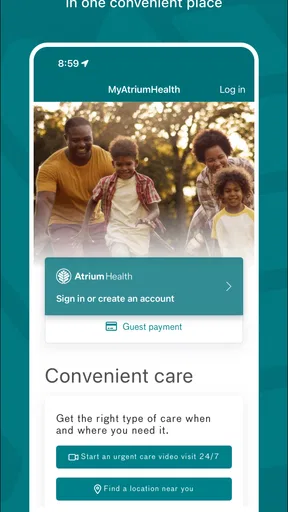
I approached it less like a novelty app and more like a practical digital front door to healthcare. That distinction matters. It is not designed to replace a clinician, diagnose a problem, or become a complete health-monitoring platform. Its strength is organization. Instead of searching through email, paper instructions, and separate services, I can use one healthcare-specific place to keep track of information connected with my care.
What makes MyAtriumHealth useful in everyday care
The most convincing part of the experience is the way it puts health-related tasks into a familiar mobile format. When I need to check something connected with an appointment or review information from a recent interaction with a provider, having a dedicated app is more convenient than relying on memory or waiting until I am back at a computer. That convenience is especially valuable for people who manage several appointments or help coordinate care for a family member.
A realistic example is a busy weekday when I need to confirm a healthcare detail before leaving home. Rather than calling a clinic simply to ask for information that should already be available to me, I can open the app and look through the relevant parts of my health account. If I am preparing for a visit, I can also use the time beforehand to review what I need to discuss. This does not make healthcare effortless, but it can make the administrative side less scattered.
That organization is a stronger benefit than the short store summary might suggest. A medical app earns its place on my phone when it helps me act at the right moment. The useful question is not whether it contains an impressive number of tools; it is whether I can find the information I need without switching between unrelated channels. MyAtriumHealth is built around that practical goal.
It is also helpful for people who prefer to keep a running record of their healthcare interactions. I find that digital access changes the way I prepare for appointments: I am more likely to check previous information, write down questions, and notice details that I might otherwise forget. The app does not replace personal notes, but it gives those notes a more dependable starting point.
A better workflow before and after appointments
One of my favorite ways to use a healthcare portal is before an appointment, not during an emergency. I can take a few minutes to gather questions, check the information already associated with my care, and make sure I understand what I want to raise with the provider. This preparation can make a short consultation more productive because I am less likely to remember an important question only after the visit ends.
After an appointment, the same habit works in reverse. I can return to the app to review the information connected with the visit and use it as a reference while planning the next step. For someone who tends to lose printed instructions or forget the exact wording of a conversation, a centralized account is a meaningful improvement over relying on scraps of paper.
There is an important trade-off here. Convenience can encourage me to check information quickly, but healthcare details still deserve careful reading. I would not treat a portal screen as a substitute for asking a clinician to explain something unclear. The app is best used as a reliable place to access and organize information, while medical decisions remain a conversation with a qualified professional.
A particularly practical tip is to open the app when I am calm and not already rushing to a clinic. Learning where information is located ahead of time makes the experience much less stressful when I genuinely need it. Medical apps are rarely at their best when someone is trying to navigate them for the first time while worried, late, or unwell.
Who benefits most from having one health account
MyAtriumHealth makes the most sense for an Atrium Health patient who wants a central mobile route to personal health information. It can also suit someone who regularly helps a parent, partner, or child keep healthcare tasks organized, provided the account and access arrangements are handled appropriately. In those situations, reducing the number of places to check can be more valuable than having a long list of extra features.
The app is also a good fit for people who are comfortable using a smartphone for important records. If you already use your phone for calendars, banking, and secure personal services, the basic idea should feel natural. I like the consistency of having healthcare available in the same general environment as other daily responsibilities, while still remembering that medical information deserves extra attention.
People who visit different health systems may find the experience less complete. A portal connected to one provider is naturally most useful for care delivered through that provider. If your medical life is spread across unrelated organizations, you may still need other portals, phone calls, or documents. In that situation, MyAtriumHealth can be useful without becoming your single healthcare command center.
It is also not the right choice for someone looking primarily for fitness tracking, nutrition coaching, meditation, or broad symptom exploration. Those needs belong to different types of apps. MyAtriumHealth is a medical access tool, and judging it by the standards of a wellness app would miss its purpose.
Where it compares well with usual alternatives
The usual alternative to a healthcare app is a mixture of phone calls, browser logins, printed paperwork, and messages saved in different places. That approach can work, but it asks me to remember more and search more. A mobile portal has a clear advantage when I need a quick reference while away from home or when I want to prepare for care without waiting for office hours.
Compared with using a desktop browser, a phone app feels more immediate. I am more likely to check a mobile application during a normal day than to sit down at a computer for a small healthcare task. That difference sounds minor, but repeated small conveniences are exactly what make a portal worthwhile.
On the other hand, a browser can feel better for reading lengthy information or comparing several details at once. If I am reviewing a complicated set of records, I may prefer a larger screen. MyAtriumHealth should therefore complement, rather than completely eliminate, other ways of accessing care information. The best option depends on whether I need quick access or extended reading.
It also differs from an independent health-record organizer. A general organizer may be designed to combine information from multiple providers, while MyAtriumHealth is centered on the Atrium Health relationship. That specialization is its strength for Atrium patients and its main limitation for everyone else.
Small habits that make the app more useful
I would begin by treating the app as part of an appointment routine. Before a visit, I would review the information available, list questions in a separate note if necessary, and check the app again afterward. This creates a simple before-and-after workflow instead of opening it only when something has already gone wrong.
Another useful habit is to avoid assuming that the newest information is automatically the most important information. Medical accounts can contain many details, and the item I need may not be the first thing I notice. I take a moment to read dates, provider context, and instructions rather than skimming. That extra pause is more important in a medical app than it would be in an ordinary shopping or travel application.
I also recommend keeping expectations realistic about communication. A portal can make information easier to reach, but it does not guarantee an instant response or replace urgent services. If a situation is serious or time-sensitive, I would use the appropriate emergency or clinical channel instead of waiting for an app-based interaction.
For families, the key issue is organization and appropriate access. I would not casually share a login or leave a health account open on a shared device. The convenience of one place should not come at the expense of privacy. A person helping another family member should use the access method intended for that relationship rather than improvising.
The limitations I noticed in the overall proposition
The largest limitation is not a flaw in the idea; it is the app's dependence on the healthcare network behind it. If Atrium Health is not involved in your care, there is little reason to choose this particular portal. Even for an Atrium patient, information from another provider may remain outside the app, so I would not expect it to replace every medical record I have.
There is also a learning curve whenever a healthcare account contains several kinds of information. Medical terminology can be unfamiliar, and a screen that is technically clear may still leave me wondering what an item means or what action I should take. That is a limitation of digital healthcare generally, but it matters here because convenience can create false confidence. I still need to ask questions when something is ambiguous.
The app is less compelling for people who rarely use mobile services or who prefer speaking directly with staff. A phone call may be more comfortable for a complicated situation, especially when the issue involves several details that are difficult to explain through a digital interface. MyAtriumHealth is a useful additional channel, not a reason to abandon human support.
I would also avoid installing it solely because it is free. The price removes a barrier, but usefulness comes from having a genuine Atrium Health connection and a reason to access healthcare information on a phone. For everyone else, a different provider portal or a broader record-management option may be more appropriate.
Compatibility, audience, and day-to-day expectations
The app is free and rated for Everyone, which makes it approachable for a wide range of users. It is currently at version 11.7.2 and requires iOS 11 or later, so iPhone users should check that their device meets that basic requirement before trying to install it. The age rating describes general accessibility, but it should not be confused with medical suitability for every situation; children and dependent adults still need appropriate supervision and account arrangements.
Its long presence in the mobile healthcare space also gives the product a sense of continuity. It was released on July 28, 2011, and the current version shows that it remains maintained as a live service rather than a forgotten utility. I do not see that history as proof that every interaction will be perfect, but it does make the app feel like an established part of Atrium Health's digital access strategy.
The user response is encouraging without making the decision automatic. The app holds a 4.4 average from around 1,800 ratings, and it has roughly 700 written reviews. It has also passed 500,000 installs. Those figures suggest that many people find it worthwhile, but they cannot tell me whether it will fit my exact provider relationship or preferred way of managing care.
That is why I would recommend checking the practical question first: do I receive care through Atrium Health, and do I want mobile access to that relationship? If the answer is yes, the app deserves a trial. If the answer is no, its otherwise sensible design will not compensate for the lack of a relevant health account.
My recommendation after using it as a patient tool
MyAtriumHealth is strongest as a focused healthcare access app, not as an all-purpose health companion. I like it because it addresses a real problem: the scattered, repetitive work of keeping up with personal healthcare. Its value appears in small moments—checking information before leaving for an appointment, preparing questions, reviewing details afterward, or helping keep a family member's care organized.
I would recommend it to Atrium Health patients who want a convenient mobile starting point and who are willing to read medical information carefully rather than treating the app as an automated adviser. It is especially appealing to people who dislike phone calls for simple administrative tasks and to anyone who wants a more consistent routine around appointments.
I would skip it if my care is handled elsewhere, if I need a multi-provider record solution, or if my main goal is wellness tracking. In those cases, a different portal or a broader health app would serve me better. That limitation is clear, but it is also honest: a specialized medical app does not need to be universal to be useful.
For the right patient, the best reason to install MyAtriumHealth is less searching and better preparation. It will not remove every complication from healthcare, and it should never replace professional advice in an urgent or confusing situation. Still, as a free mobile companion from Atrium Health, it offers a practical way to keep everyday health information closer at hand. My final verdict is favorable, with one condition that matters more than any rating: its usefulness begins with being part of the Atrium Health system.
Verdict
Strengths of MyAtriumHealth
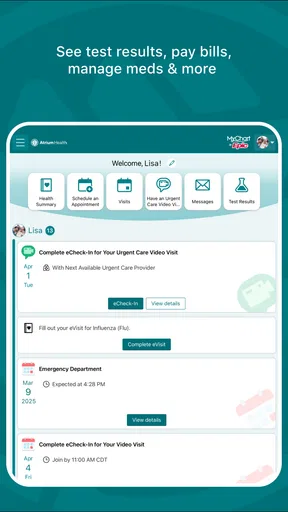
- Secure access to appointments, test results, and medical records in one place.
- Easy prescription refill requests and medication information management.
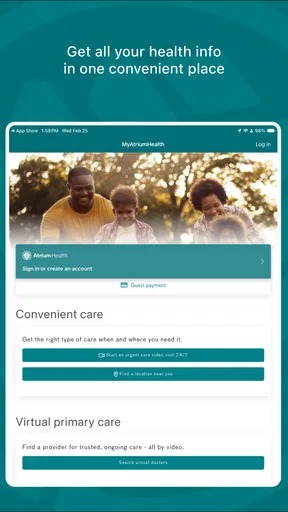
- Supports video visits for convenient care without traveling to a clinic.
- Health reminders and notifications can help users stay on top of care.
- Connects eligible family members’ health information through proxy access.
Limitations of MyAtriumHealth
- Some features require care through the Atrium Health network.
- Account setup may require identity verification and personal details.
- Certain results or records may appear only after provider release.
- Video visits depend on a compatible device and a stable internet connection.
- App performance and available services may vary by location or device.
Similar Picks in This Category
View All
WebMD: Symptom Checker
WebMD, LLC4.1

Microphone Amplifier
DOSA Apps4.2

Anatomy Learning - 3D Anatomy
3D Medical OU4.5

Period Tracker and Calendar
SimpleInnovation4.9

GoodRx: Prescription Coupons
GoodRx4.8

CVS Health
CVS Pharmacy4.5
Frequently Asked Questions
What is MyAtriumHealth, and what can I use it for?
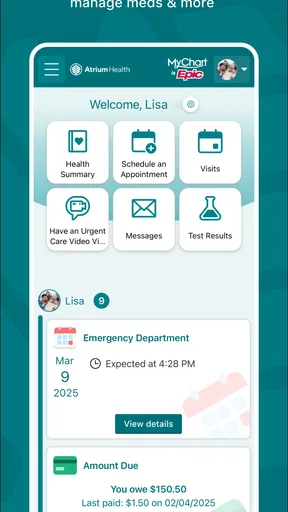
MyAtriumHealth is the official patient portal app for Atrium Health patients. After signing in, you can review parts of your medical record, check test results, manage appointments, request prescription refills, view bills, send secure messages to care teams, and access certain virtual care services. Available features may vary depending on your location, provider, age, and the type of care you receive.
How do I sign in to MyAtriumHealth if I already have an Atrium Health account?
You generally sign in using your MyAtriumHealth username and password, which are connected to your Atrium Health patient portal account. If you are a new user, the app may guide you through account activation using information provided by your care team. For forgotten credentials, use the recovery options on the sign-in screen. Avoid sharing your password, and contact official support if you cannot verify your identity.
Can I schedule appointments and communicate with my doctor through the app?
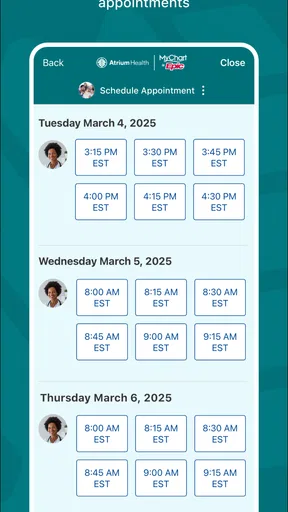
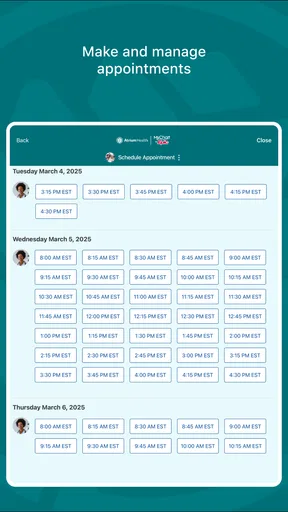
In many cases, MyAtriumHealth lets you request or schedule eligible appointments, view upcoming visits, receive reminders, and review appointment details. You may also be able to send secure messages to participating providers, although messaging is not intended for emergencies and response times can vary. Some appointment types, departments, or providers may require calling the office directly.
Can MyAtriumHealth show test results, medications, and other medical records?
The app can provide access to selected health information, such as laboratory results, imaging reports, medications, allergies, immunizations, visit summaries, and clinical notes, depending on what has been released to your account. Results may appear at different times, and some information can be difficult to interpret without professional guidance. Contact your healthcare provider if you have questions about a result or treatment plan.
Is MyAtriumHealth safe to use, and can I use it for urgent medical problems?
MyAtriumHealth is designed to provide secure access to your patient information and healthcare services, but you should protect your phone with a passcode or biometric lock and always sign out on shared devices. The app is not a replacement for emergency care. For severe symptoms or an immediate danger, call emergency services rather than waiting for an in-app message or appointment response.
